Dr Yanick Kemayou and Michèle Traoré
Kabakoo Academies
Kabakoo Academies is an innovative educational technology start-up founded by Dr Yanick Kemayou and Michèle Traoré in Bamako, Mali, that aims to address the local and regional employment crisis. Dr Kemayou began his career as a street vendor in Cameroon after struggling to find a job. He later migrated to Germany in search of better opportunities, where he earned a PhD in designing evidence-based programs. Michèle Traoré, originally from Timbuktu, Mali, combines global expertise with culturally grounded leadership. Their personal experiences of the challenges faced by millions of young Africans led to the founding of Kabakoo.
Kabakoo Academies aims to address the huge skills gap among youth in Mali, where formal job opportunities are scarce, and over 80% of employment is informal. Kabakoo believes that traditional methods of developing human capital in Africa are insufficient and that the current education system often fails to reflect local realities and knowledge. There is thus a significant need for and an opportunity to develop innovative solutions.
Kabakoo's mission is to promote a global transition toward a sustainable and inclusive future by providing learning experiences that are both locally relevant and transformative. Kabakoo is recognised as a leading EdTech platform by notable organisations such as the African Union, UNESCO, and the World Economic Forum, which has named it one of the sixteen “Schools of the Future.”
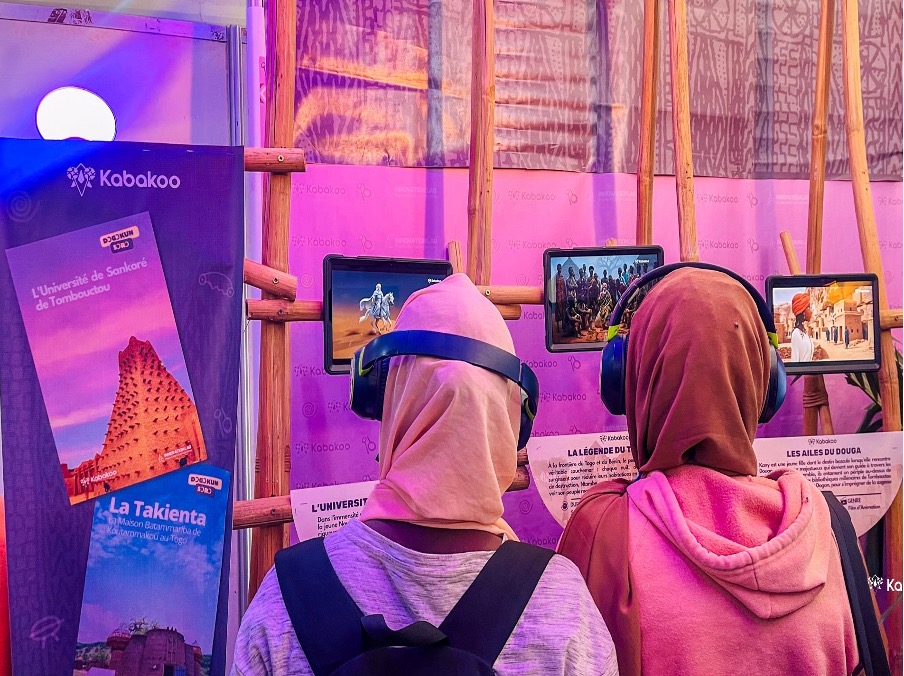
Kabakoo is an innovative educational hub that blends traditional in-person learning with online training. This hybrid approach equips youth with essential skills for the job market and entrepreneurship, ensuring they are well-prepared for future career opportunities. It emphasises project-based learning and a "highdigenous" pedagogy, which integrates new technologies with Indigenous knowledge to develop innovative solutions to the specific challenges faced by African youth. By doing so, it empowers learners to collaborate and effectively address real-world issues.
Kabakoo connects young people in Mali’s urban and semi-urban areas to global learning opportunities through community-based, experiential digital education and local partnerships. Learners benefit from training and support from a network of international mentors, enhancing their skills in areas such as digital fabrication, entrepreneurship, digital marketing, design thinking, and prototyping. The project-based educational approach allows learners to design and test solutions to real-world challenges, creating tangible value in their communities. Most training is provided to learners at little or no cost, thanks to institutional partnerships.
Kabakoo has introduced several initiatives to create an inclusive and accessible learning environment. Among these initiatives are hybrid training programs that combine both virtual and in-person learning, tailored for youth upskilling. The initiative has also integrated an AI-powered virtual mentor, which provides continuous feedback and guidance to users 24/7 via the Kabakoo application and WhatsApp. To further enhance engagement, Kabakoo employs gamified learning experiences and offers cloud-based resources that support scalability and adaptability. In addition, the organisation is making efforts to localise technology by integrating local languages, such as Bambara (the most widely spoken language in Mali), into its AI-driven training tools. By combining digital infrastructure such as its mobile app with in-person mentorship and peer networking, Kabakoo empowers young Africans to develop responsive, context-sensitive skills that improve their ability to earn a living.
Kabakoo has developed innovative learning hubs in Bamako and Segou that empower young people in various crafts, including artisanship and entrepreneurship. It also offers a comprehensive range of skills training in areas such as digital skills, entrepreneurship, marketing, design thinking, regenerative architecture, and organic agriculture. Programs typically last 4 to 6 months and have no enrollment requirements. The costs of education are heavily subsidised by Kabakoo’s partners, with learners only paying a small fee. At least 30% of the learners and 40% of the mentors are women, promoting gender equality and women's empowerment.
Kabakoo aims to overcome the colonial legacy of educating young people to become job seekers rather than job creators. They are encouraged to see themselves as innovative, creative, and capable entrepreneurs and changemakers. The blend of new technologies with indigenous knowledge - for example, integrating local languages and cultures into AI-driven tools - allows them to feel proud of their heritage,
Since its inception, many of Kabakoo's alumni have successfully established small businesses, thereby creating employment and livelihood opportunities for themselves and others in the community. Furthermore, Kabakoo itself employs 28 full-time staff members, most of whom are alumni.
Kabakoo recently launched the Innovation Lab, an initiative to combat climate change and promote environmental preservation. A key component of this program is training in regenerative architectural practices. This training equips young individuals with the skills to design prototypes for eco-friendly, sustainable buildings using indigenous or local construction techniques and cost-effective materials (e.g. adobe and bamboo), which are well-suited to hot climates. These materials embody less energy than commonly used materials such as concrete and steel, resulting in buildings that require less energy to heat or cool. Kabakoo plans to establish a training campus that will utilise locally sourced, indigenous construction materials that are more environmentally friendly.
Kabakoo also offers training in organic agriculture, emphasising the importance of soil health and advocating for reducing the use of artificial fertilisers and chemicals, which harm the natural environment.
Kabakoo has achieved notable success through its innovative approach that integrates advanced technologies with indigenous knowledge systems. This ensures that technology is applied in a way that is relevant to the local context, accessible to and beneficial for all, promoting inclusivity. The organisation offers affordable training programmes and maintains open-enrolment policies that admit everyone regardless of educational background, resulting in a significant increase in youth participation. Kabakoo’s focus on empowerment and inclusivity has helped develop a skilled professional community capable of making meaningful contributions to the local economy and society.
Kabakoo’s key successes include:
- Entrepreneurs who participate in Kabakoo's training experience income growth of up to 71% within just three years.
- 42% of learners secure opportunities within 6 months, and 65% of those roles are paid jobs.
- The program is currently actively supporting around 35,000 young people, of whom only 22% have completed high school
- The 2020 cohorts realised 105% increase in growth mindset and a 47% boost in self-confidence. Additionally, 90% of learners reported improvements in their personal and professional situations as a result of the Kabakoo program.
Kabakoo alumni also experienced an 81% improvement in their social relationships, skills and networking capabilities. The program was recognised by the World Economic Forum as one of 16 Schools of the Future. The United Nations Environment Programme also commended it for developing ecologically friendly housing prototypes.
Since its formation in Bamako in 2018, Kabakoo opened a second co-learning space in Segou and introduced the Kabakoo App in 2022. In 2024, it rolled out a bilingual AI Mentor that can communicate in both French and Bambara. In 2025, WhatsApp was integrated into its learning ecosystem, expanding its reach and enhancing the learning experience for its users.
Kabakoo is currently facing challenges with funding stability. The organisation operates in a competitive funding environment, which makes it challenging to secure multi-year commitments and hinders long-term planning. Additionally, successful expansion relies on integration into public education systems, an essential but time-consuming process that requires alignment and formal agreements with governmental and institutional partners.


.png)



%2520-%2520resize.jpeg)