Bertha Foundation
Philippi Village
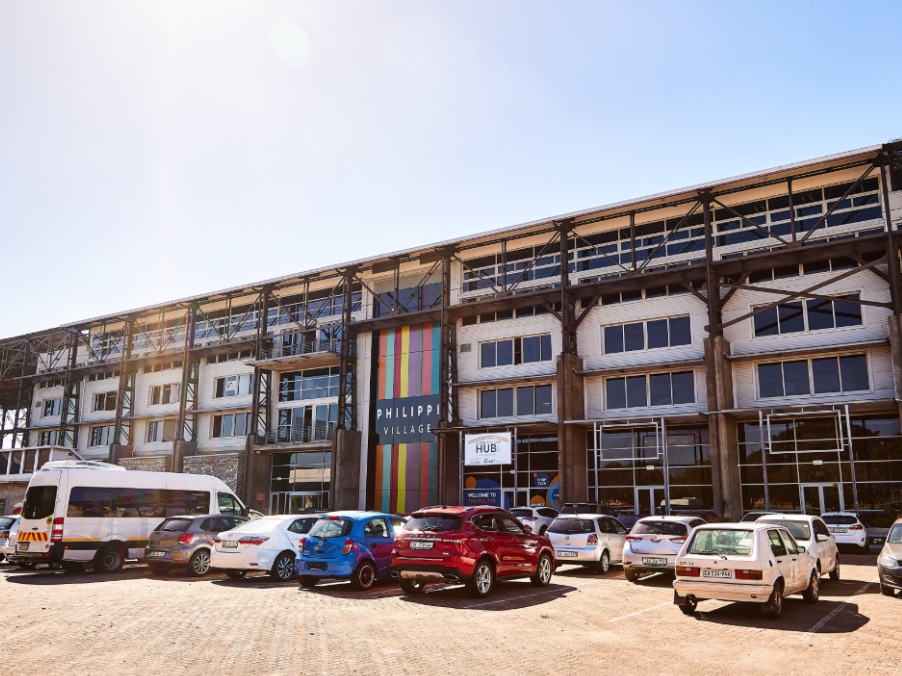
Philippi Village is an integrated, mixed-use community and business hub in Philippi township, Cape Town. It provides affordable workspaces, business support, and community-centred programming for entrepreneurs, small businesses, and residents from underserved and marginalised communities. Having started as a purely entrepreneurial skills development initiative, Philippi Village has evolved into the vibrant community and business hub it is today, focusing on promoting local economic development and reducing spatial inequality by bringing opportunities, infrastructure, and support services closer to township communities.
The Philippi Village idea originated from the understanding that many townships in Cape Town and throughout South Africa grapple with significant unemployment, poverty and limited access to essential entrepreneurial resources, such as safe and suitable workspaces. These challenges are also compounded by a lack of business skills and are deeply rooted in the country's history of spatial segregation along racial lines.
To address this gap, a partnership between the Bertha Foundation in 2015 resolved to regenerate a disused cement factory site into a functional, community-centred precinct featuring workspaces for small and medium-sized enterprises (SMEs), offices, training facilities and community amenities.
Philippi Village takes a place-based, ecosystem approach to local economic development by transforming a previously underutilised industrial site into a vibrant community and business hub embedded within a township context. Instead of making entrepreneurs travel into the city centre to access opportunities, the Village brings affordable workspaces, business support and community programming directly to underserved communities, reducing barriers to entry and enabling participation in the local economy.
Philippi Village offers a comprehensive range of services and facilities, including affordable workspaces, shared offices and container-based retail units. These amenities are part of an innovative design utilising an disused cement factory and over 120 recycled shipping containers. This unique facility accommodates various businesses, including retail traders, creative and design firms, food vendors and service-oriented small businesses. By providing essential support, the initiative empowers entrepreneurs with limited capital to establish and grow their ventures in a supportive environment.
In addition to business-focused amenities, Philippi Village features training and educational facilities, including a public library operated by the City of Cape Town and the Graduate School of Business at the University of Cape Town. The initiative further enhances community life by offering recreational areas, public spaces and a rooftop food garden. The model is sustained through a blended funding approach that combines rental income, donor funding, and strategic partnerships, enabling flexible pricing while maintaining long-term operational viability. Together, this integrated approach enables Philippi Village to function not just as a physical space but as a platform for inclusive economic participation, community development, and long-term impact.
Philippi Village serves an essential function in improving the lives of underserved communities by creating opportunities for inclusive economic participation, education, training and overall community well-being in a township context. The initiative has successfully implemented educational programs for children and equipped youth and adults with entrepreneurial skills through training, mentorship, and upskilling opportunities. Another key component of its educational programs is the emphasis on environmental awareness and active community engagement through various projects that integrate sustainability into daily practices and local knowledge systems.
Additionally, Philippi Village has engaged thousands of individuals by offering essential services, including meals through its community kitchen programme, access to internet and IT resources, legal assistance and social services, helping to meet immediate needs while enabling broader participation in local economic and social life. Beyond services and learning, Philippi Village strengthens local livelihoods and social cohesion by supporting enterprises, local contractors and employment opportunities, including both permanent and temporary work. It also creates a platform for collaboration, innovation and local enterprise growth, while maintaining ongoing engagement with local businesses and partners. Together, these interventions expand access to opportunity, strengthen community networks and improve quality of life by bringing infrastructure, resources and support directly into a historically marginalised community.
The development of Philippi Village incorporates several environmentally sustainable practices to reduce its ecological footprint while raising community awareness of environmental issues. The project has repurposed a disused cement factory site and utilised recycled shipping containers and reclaimed materials to construct a range of business and community spaces. This approach minimises construction waste and the demand for new building materials.
Additionally, Philippi Village promotes urban agriculture through a micro-farm, supporting local food production and encouraging sustainable food practices within the community. Environmental programs and activities hosted at the hub help raise awareness about recycling, waste reduction, and environmental stewardship among local residents and entrepreneurs.
The success of Philippi Village has resulted from the unwavering commitment of its funders, particularly the Bertha Foundation, which continues to support the Village’s impact initiatives. Additionally, strategic partnerships with organisations such as the Open Society Foundations and the Be The Earth Foundation have played a significant role, providing both financial aid for various projects and valuable networking opportunities.
Another key factor in the success of Philippi Village is its ongoing engagement with the local community. This approach actively involves residents, entrepreneurs and organisations in the programs offered at the hub. This participatory environment has cultivated a sense of community ownership and trust, which in turn enhances local support and contributes to the long-term sustainability of its initiatives. Additionally, the initiative has established strong relationships with local government, particularly the City of Cape Town, which plays a crucial role as one of its key tenants by housing a community library within the village.
Philippi Village demonstrates measurable impact through employment creation, service delivery, and community engagement. Between September 2025 and February 2026, the initiative created 186 permanent jobs and 89 temporary positions for community members. During the same period, it offered meals to 4,988 community members, 2,582 people accessed internet and IT services, and 209 people received free legal advice.
Additionally, during that period, the Village delivered 22 educational programmes reaching over 2,000 children and youth, and supported over 120 small businesses through its Container Walk and tenant ecosystem. At least 48 community members participated in green education workshops, and 10 women attended women's wellness sessions. It also hosted 6 community engagement meetings attended by at least 184 people.
Philippi Village has evolved from a primarily infrastructure-led redevelopment project into a dynamic, place-based ecosystem focused on inclusive economic participation and community development. In its early stages, the emphasis was on repurposing a disused industrial site and providing affordable workspace for small businesses; however, over time, it became clear that physical infrastructure alone was insufficient to address the complex social and economic challenges facing the surrounding community.
In response, the model expanded to integrate programming, partnerships, and services ranging from skills development and youth programmes to community safety initiatives, enterprise support, and access to social services. This shift was driven by direct engagement with community needs and a growing recognition of Philippi Village’s role as a connector among residents, local organisations, and external stakeholders.
Today, Philippi Village operates as a multi-dimensional platform that combines space, support, and partnerships to deliver both economic and social impact. Its continued evolution reflects a move toward deeper community integration, data-informed decision-making, and a more intentional focus on long-term sustainability and systemic change.
Philippi Village has faced several challenges since its establishment. In its early stages, the project experienced vandalism and resistance from some community members. This was largely due to mistrust and uncertainty about the development's purpose. Many residents were concerned about changes in land use, as parts of the site had previously served as an ablution space for nearby households.
Through ongoing community engagement and outreach, trust was gradually built, leading to greater local acceptance and reduced negative perceptions of the project. However, ongoing challenges remain, including maintaining long-term financial sustainability, collecting rentals, preserving infrastructure, and balancing commercial activities with community-oriented services for marginalised residents.


.png)