
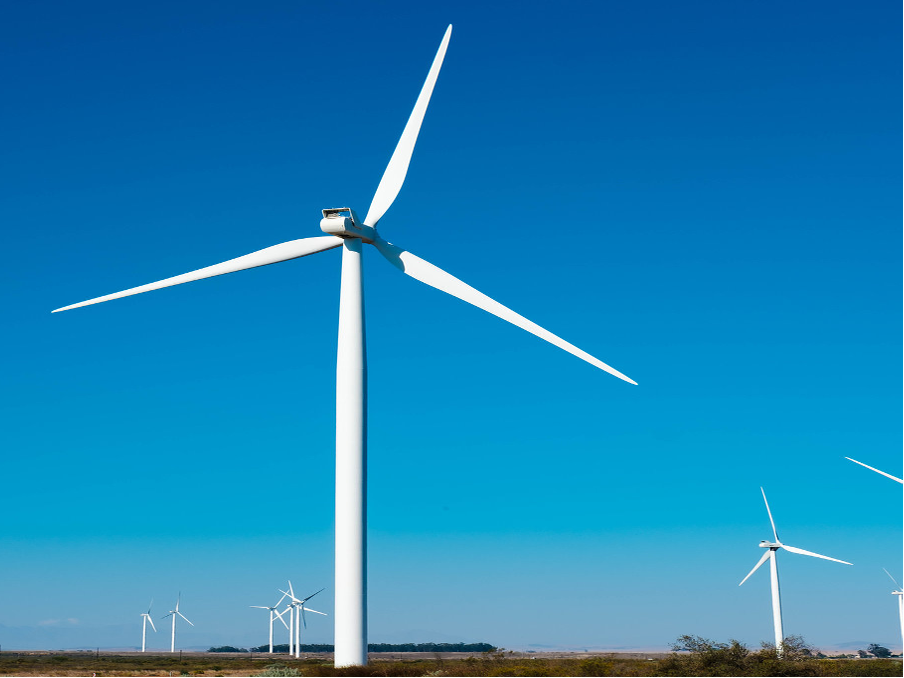
Umoya Energy Wind Farm
Umoya Energy Wind Farm
The story of the Umoya Energy Wind Farm began in 2008, when the owners purchased the land with the intention of exploring for phosphate. This acquisition coincided with a significant moment in South Africa, as discussions about the renewable and sustainable energy sector were gaining momentum under the Department of Energy’s Renewable Energy Independent Power Producer Procurement Programme (REIPPPP).
In response to the government’s REIPPPP call for proposals, Umoya's shareholders and investors pivoted away from mining and submitted a comprehensive bid focused on renewable energy production. This led to the development of the Umoya (Hopefield) Energy Wind Farm, a project dedicated to harnessing wind energy to help achieve South Africa's renewable energy goals. The wind farm is equipped with a 132kV transmission line spanning 2 km that connects it to the national power grid.
Umoya Energy Wind Farm spans approximately 2,400 hectares and is a privately funded Independent Power Producer (IPP). It is significant as the first utility-scale wind farm in South Africa, having been operating since February 2014. The wind farm utilises the strong coastal winds to generate clean, renewable energy, providing an alternative to burning coal, which continues to dominate South Africa's energy sector.
Umoya Energy generates revenue by selling the electricity it produces to Eskom. In addition to its commitment to sustainable energy production, the wind farm invests a portion of its revenue in community empowerment initiatives. These include capacity building, job creation, skills development, and funding for programs that benefit local communities. Support is provided for small businesses, infrastructure development, and education, all of which aim to promote sustainable development in the region.
Umoya Energy Wind Farm has made significant contributions to local communities by creating numerous employment opportunities. In addition, Umoya Energy is committed to providing a range of social services to the surrounding communities through the Hopefield Initiative Project. The selection of services is based on a thorough Community Needs Assessment that identified critical gaps in access to services, including education and skills development, housing, and food security. Through the Hopefield Initiative Project, Umoya Energy funds Early Childhood Development (ECD) services, educators' salaries at local schools, school feeding programmes and tertiary education scholarships for local students. Umoya Energy has also taken proactive steps to equip young people with marketable skills, fostering their pathways to future employment.
Additionally, Umoya has invested in upgrading housing infrastructure in these communities, with over 854 households benefiting from improved plumbing and carpentry and the installation of solar water geysers by 2020. Local residents received training to deliver these essential services, thereby building skills and creating jobs.
Moreover, the wind farm funds a Small, Medium and Micro Enterprise (SMME) Accelerator program, providing seed capital and entrepreneurial support to empower local businesses. This initiative aims to transform new enterprises into more formal, sustainable SMMEs, further enhancing local employment opportunities
Almost half of the land designated for the Umoya Energy Wind Farm is classified as a Conservation Area and is managed by South African National Parks (SANParks). The area is slated to be integrated into the larger West Coast National Park, renowned for its rich biodiversity. In support of environmental stewardship, the wind farm actively contributes to the South African National Parks Conservation Project. This funding has supported the removal of water-intensive invasive alien plant species and the implementation of various essential land management practices in partnership with SANParks. As a result, the project not only helps preserve native habitats but also supports ecological restoration in the region.
Additionally, the wind farm plays a crucial role in generating renewable energy, significantly reducing greenhouse gas emissions. It avoids approximately 183,200 tonnes of carbon dioxide emissions each year compared to traditional fossil-fuel power stations, contributing to the global effort to combat climate change.
In 2023, the Umoya Energy Wind Farm launched a blade-painting initiative to reduce bird and bat fatalities from collisions with wind turbines. This initiative involves painting one of the three turbine blades red or black to enhance visibility for birds, thereby minimising collisions and saving lives.
The success of the Umoya Energy Wind Farm can largely be attributed to the stringent requirements of the Renewable Energy Independent Power Producer Procurement Programme (REIPPPP), which encouraged developers to think creatively to meet the REIPPP’s social and environmental standards.
Early engagement with community members in Hopefield was crucial to the project's success during the bidding phase. The community's input helped ensure the wind farm was well-received, as they had expressed a significant need for this initiative.
Additionally, Umoya Energy successfully established a Biodiversity Offset Agreement with SANParks and launched the first scalable initiative to improve energy access, living conditions, and livelihoods for low-income households in Hopefield, the Hopefield Initiative Project (HIP).
Umoya Energy has designated nearly 50% of its land as a Conservation Area managed by SANParks and will become part of the West Coast National Park. This environmental management initiative has employed at least 50 local residents. Additionally, the wind farm significantly reduces carbon emissions, preventing around 183,200 tonnes of carbon dioxide from being released each year compared to conventional fossil-fuel power stations.
The wind farm generates approximately 176,600 MWh of clean, renewable energy for the national grid each year, helping to meet South Africa's increasing electricity demand. This substantial output is enough to power about 49,000 low-income households or approximately 22,000 medium-income households.
The project’s community services programme funds educator salaries at least five schools. Five additional schools benefit from feeding programs that provide meals to over 400 learners annually in the Middlepos and Louwville communities. Revenue from the project has also funded the renovation of over 850 houses through the Hopefield Home Improvement Project, improving their roof insulation, plumbing, and electrical systems and installing solar geysers.
Umoya Energy initially focused on the wind farm, but later launched a range of socio-economic and enterprise development initiatives to serve local communities.
Umoya Energy faces challenges related to high equipment costs and meeting community expectations. Additionally, changes in government policy pose a significant risk to all of their projects. Such challenges could lead to substantial shifts in the company's economic landscape, potentially resulting in lower tariffs. This decrease in revenue would subsequently limit the budgets available for socio-economic initiatives and enterprise development, ultimately hindering efforts to uplift local communities.


.png)


.jpeg)

