
Sanivation
Naivasha Water and Sanitation Company
Nakuru County Government
Sanivation
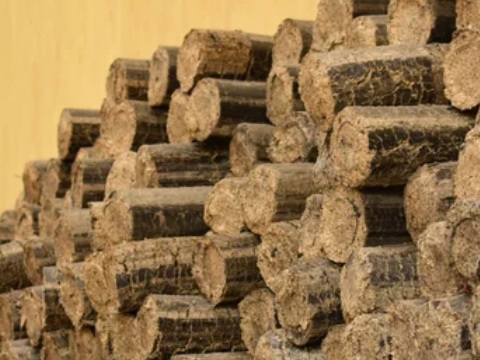
The Naivasha Treatment Plant is a waste-to-energy collaboration between Sanivation, a private social enterprise focused on improving sanitation, and the Naivasha Water and Sanitation Company (NAIVAWASCO), which is owned by the Nakuru County Government in Kenya. This initiative was launched in 2015 to tackle the inadequate sewer system in Naivasha whilst simultaneously addressing deforestation caused by the use of firewood and charcoal for household energy. As an important agricultural centre, Naivasha is home to numerous flower farms that generate substantial organic waste, including flower stems, cuttings, and packaging materials. This waste has contributed to environmental pollution in the area. To combat these challenges, Sanivation and NAIVAWASCO partnered to establish a facility that converts sewage and agricultural waste into briquettes, providing an alternative energy source for cooking and heating. Sewage is collected from poor and underserviced communities via container toilets that are emptied and cleaned twice a week. The collected waste is transported to treatment facilities, where it is combined with agricultural waste to produce briquettes. In addition to improving sanitation, this helps reduce agricultural waste and mitigate deforestation.
The Naivasha plant is designed around an innovative sanitation model that promotes circular waste-to-fuel practices. It focuses on recycling two primary types of waste: faecal sludge collected from households and agricultural biomass residues from nearby horticultural activities. The process starts with collecting human waste from container toilets and specially designed toilets. Exhauster trucks are used to extract and transport the waste to the treatment facility. On arrival, the waste undergoes a thorough processing stage that includes thermal and solar drying to effectively eliminate all pathogens. Once treated, it is combined with carbonised organic materials, such as sawdust and plant residues. This composite mixture is then compressed to create fuel briquettes, offering a cleaner alternative to traditional charcoal and firewood. The resulting briquettes are packaged and distributed to a diverse range of clients, including schools, institutions and factories, showcasing a sustainable approach to waste management and energy production.
The Naivasha Waste-to-Energy Plant has made notable strides in addressing key issues in the Naivasha Sub-county. It has effectively addressed longstanding challenges related to insufficient sanitation, as well as the management of agro-litter in Naivasha town and the surrounding sub-county. This has contributed to a decrease in waterborne diseases and overall improvements to public health. The plant has also created a variety of green job opportunities for local residents and young people in activities such as waste collection, plant construction and maintenance, waste treatment, and briquette production. Over 90% of the workforce is drawn from the local community, of whom 50% are youths. Moreover, the facility has promoted the economic utilisation of organic waste materials such as sawdust and crop residues, which were previously discarded. This initiative not only supports environmental sustainability but also contributes to the region’s economy.
The Naivasha plant has significantly helped mitigate environmental contamination from untreated sewage and improve the cleanliness of local water bodies. It has also helped reduce agro-littering by promoting the recycling of organic horticultural waste, which was previously often improperly disposed of. Additionally, it supports tree conservation by reducing reliance on firewood and charcoal for cooking, which are among the main drivers of natural forest depletion. It is estimated that each ton of fuel briquettes produced saves approximately 22 trees. As of 2025, Sanivation had successfully sold over 6,536 tonnes of briquettes, preserved an estimated 33,000 trees, and abated 15,686 tonnes of CO2 equivalent. Furthermore, the briquettes, when burned, emit no odour and produce only one-third of the smoke and emissions associated with traditional firewood and charcoal. This helps lower air pollution and greenhouse gas emissions associated with cooking, thereby supporting efforts to improve health and combat climate change.
The plant’s success rests on its strong public-private partnership, which allows the government and policymakers to work with private-sector innovators. The design-build-operate model also supports project continuity by reducing the risk that the innovator will withdraw during or after construction, preventing abandonment, as has happened in other cases.
The project’s waste-to-value model promotes sustainability for the plant's operations beyond its initial funding. Additionally, the County’s Integrated Development Plans (CIDPs) prioritise non-sewered sanitation, which informs policy and creates pathways to finance the project. This approach enhances the project's financial sustainability.
The project has created over 600 direct and indirect green jobs for youth - who constitute about 50% of all employees - and women across the sanitation service chain. Additionally, the production of these briquettes has contributed to environmental sustainability by preserving over 33,000 trees, thereby mitigating deforestation and reducing the risk of desertification.
Sanivation is in the process of setting up an even larger plant (the expanded Naivasha Treatment Plant, NTPx) to serve more people in Naivasha and produce more briquettes to meet market demand. Upon completion, this Design-Build-Operate waste-to-value treatment plant will have a capacity to treat 240 m3 of faecal sludge (FS) and produce 1,200 tons of briquettes. In partnership with the utility, NAIVAWASCO, the plant will create more green jobs and improve the livelihoods and dignity of middle- to low-income urban populations in Naivasha.
The main challenge facing the Naivasha Treatment Plant is securing funding for non-sewered sanitation. While funding is increasingly directed towards water projects, Sanivation is working to emphasise the importance of non-sewered sanitation services - an issue that the government has acknowledged but often overlooked. Since sanitation services remain under government oversight, delays in government procurement processes further complicate progress.


.png)


